
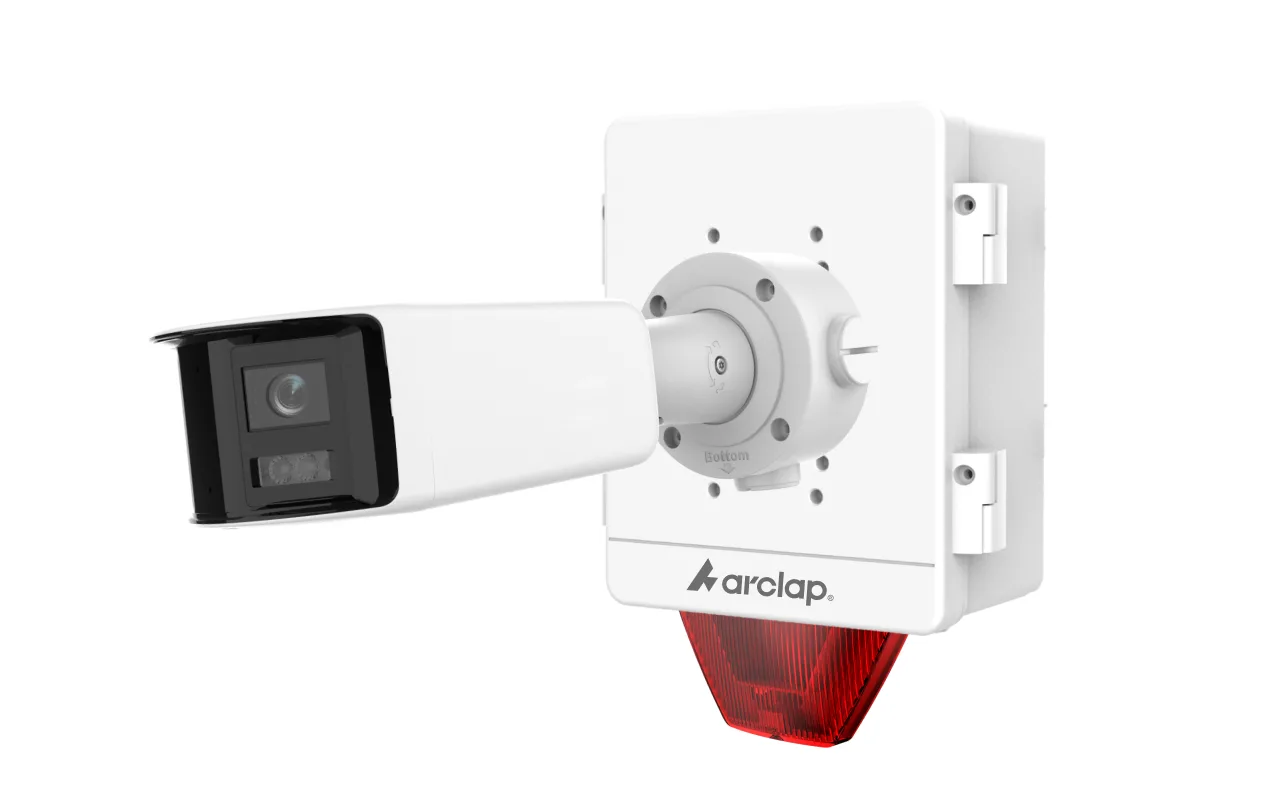
Construction site security means protecting a site around the clock against theft, vandalism and unauthorised access. It works when three layers interact: visible deterrence, automatic detection by camera and AI, and a clear escalation with evidence.
Construction site security starts the same way almost everywhere: with a fence, a padlock and the hope that it is enough. After the first theft come patrol rounds; after the second, the question of a surveillance camera. This article turns that order around and describes what actually protects a site — in three layers, from visible deterrence through automatic detection to escalation with evidence.
No single measure does. Sites that stay theft-free combine three layers: visible deterrence, automatic detection, and a clear escalation path when something happens. A fence slows an intruder down — a system that sees, records and alerts is what prevents the loss.
Layer 1 — visible deterrence
Most attempts end before they start when the site visibly watches back: a mobile video tower or security station at the access point, plus signage. Opportunists move on to easier targets.
Layer 2 — automatic detection
Nobody watches a screen all night. AI detection flags people and vehicles on the site outside working hours, around the clock — while the Privacy Shield blurs by default and images stay on Swiss servers, in line with the nDSG.
Layer 3 — escalation and evidence
An event only has value when something follows: an alert, a recorded clip, a timestamped entry in the archive. That trail is what insurance, police and building authorities can actually work with — with optional 5-year retention. Outside Switzerland, alerts go to your own monitoring centre or security provider. Access kits add the same discipline at the gate.
What doesn't work alone
- The fence. Necessary, never sufficient — it delays, it doesn't report.
- Occasional patrols. They cover minutes per night; theft takes minutes too.
- Dummy cameras. Professionals check — and a device that records nothing proves nothing afterwards.
What thieves actually take, and the escalation chain that stops it, is its own article: Site theft in Switzerland.
Video surveillance on site: what the term means today
Video surveillance on a construction site rarely means what the word suggests. Classically it meant a recorder that captures footage you review after an incident — hours of work for the question of whether anything is on it at all. A modern site surveillance camera does not just record; it judges at the moment of capture whether what it sees is relevant. That difference is no technical detail: it decides whether someone is alerted at night, or whether you have a video of the theft in the morning.
Which surveillance camera for which site
The choice follows the perimeter — and what should happen when something happens. A closed yard with one gate needs different positions than an open area with three access points and public traffic. Three questions lead to the right setup: Where does someone get in who should not? What is there to take? And who reacts at three in the morning?
Only then comes the hardware. The stations at a glance: site surveillance with Security Stations, the access side under Access Kits.
Construction monitoring is not site security
Two terms that often get mixed up. Site security means protection — perimeter, theft, access. Construction monitoring means the professional oversight of the build itself: whether it is built correctly, on schedule and to the agreed quality. A camera serves both, but differently: for protection, real-time detection counts; for construction monitoring, the complete, dated archive that later proves when which state existed.
Is 24/7 site surveillance legal in Switzerland?
Yes, with the nDSG's rules respected: proportionate coverage, signage and privacy protection — people and vehicles are blurred automatically, and access to unblurred material is strictly controlled.
Do security cameras need site power?
No. Solar-powered stations with 4G/5G run fully autonomous the whole year — see the security solution for how the layers combine.
What determines the cost of site monitoring?
Above all the perimeter: how many access points there are, how many positions it takes to cover them, and how long the setup stays. Then whether the site has power or needs to run autonomously. Billing is one-off for installation and removal, then per station and month. The configurator sizes it for your situation.
What is the difference between video surveillance and AI monitoring?
Classic video surveillance records and reports every movement — animals, vegetation and light changes included. AI-supported monitoring recognises object classes such as person and vehicle and reports only what is relevant.
Do surveillance cameras need floodlights at night?
No. The stations work with night vision and image analysis — which matters especially in residential areas, where floodlights and loudspeaker announcements regularly draw complaints from neighbours.